EIGHT-OPTION INTERACTIVE SYMPTOM FINDER
What happens when you ask for heating?
Start with an observation rather than an assumed failed part. A boiler, furnace or heat pump cannot warm a room unless a controller requests heat, the equipment can start safely, and that heat actually reaches the room. Choose what best fits your situation.
QUICK ANSWER
Why won't my heating turn on?
When your heating will not turn on, the fault is generally in one of four stages: (1) no heating demand, (2) a demand not reaching the appliance, (3) a boiler, heat pump or furnace unable to start, or (4) heat being made but not reaching the rooms. Incorrect thermostat mode, timers, missing electrical supply, boiler pressure errors, an appliance lockout, stuck control valves, circulation problems and restricted furnace airflow are examples—not interchangeable diagnoses.
In many UK homes, hot water circulates through radiators after the boiler receives a call for central heating. In many US homes, warm air is distributed through ducts by a furnace or heat pump. The same words “heating not working” therefore describe very different equipment. Find out which stage is failing before you start paying for parts.
SAFETY FIRST
When to stop troubleshooting
Never open a gas boiler casing, bridge thermostat terminals, bypass a furnace door safety interlock, defeat a lockout, dismantle a motorised zone valve or repeatedly reset a tripping breaker. Even low-voltage thermostat wiring can damage equipment when shorted. Restrict checks to accessible displays, normal settings and user-maintenance procedures in the exact equipment manual.
FIRST FIVE MINUTES
Seven safe checks, in order
- Check the obvious heat request. Select Heat or the appropriate heating programme. Temporarily set a sensible target a few degrees above the measured room temperature and allow for model-specific delays. Check Away, Holiday, Frost and ECO modes.
- Check timers and zones. A power cut, clock error or closed schedule window can suppress heating. Check which zone is actually selected rather than overriding unrelated hot-water schedules.
- Look for power—without opening anything. Is the thermostat lit? Does the boiler or furnace display light up? Are accessible appliance switches on? If an electrical breaker has repeatedly tripped, stop and request qualified help.
- Check the heating appliance display. Write down fault codes exactly. Consult its model manual; an error or lockout is not solved by turning the thermostat ever higher.
- Check sealed UK boiler system pressure only if your equipment has a gauge. Many systems show roughly 1–1.5 bar when cold, but use the manufacturer's range. Not every heating system is sealed or uses the same gauge; do not top up blindly or repeatedly.
- Compare hot water and space heating. If the taps are hot but radiators cold, the burner or heat source may work for hot water while the space-heating controls, valves or pump still have a fault. This clue depends on your boiler and system design.
- Check room delivery. Are all radiators cold, just one, or one entire zone? In US ducted heating, can you feel air from vents? These distinctions help identify whether the issue is house-wide or local.
If the problem remains, take a photo of the display/fault code and give a qualified technician the results of these checks; that often narrows their first visit.
MECHANISM FIRST
Follow the heat request through the system
Heating requires a chain of events. The thermostat or programmer must call for heat. The request may travel through a wireless receiver, motorised zone valve, or electronic control board. The heating equipment must accept the request and satisfy its safety requirements. Finally, a pump and radiator circuit or an air handler and ductwork must distribute warmth.

In a system with separate heating zones, one room or floor can remain cold even while other zones work. Likewise, an appliance fan or circulation pump can run even when no effective warmth is being delivered. Recording where the heating sequence stops is a better troubleshooting method than replacing a thermostat on suspicion.
STAGE 1 · DEMAND
Controls show no heating demand
Room thermostats generally start a call when the measured temperature is below the target and the heating programme permits operation. A timer programmed to be off, wrong day or time, a low target temperature, or a Holiday/ECO setting can prevent a call even when every piece of hardware is healthy. Some smart thermostats also use minimum on/off times that avoid rapid switching.
Compare the current reading with the setpoint; use Heat or a supported temporary override, then watch the demand indicator. If the thermostat screen is dead, determine whether your model has user-changeable batteries or is powered by a wired supply. Do not remove fixed wallplates or inspect live wiring. For those specific symptoms, see why the thermostat is not working and why the heating programmer is not working.
STAGE 2 · COMMUNICATION
Thermostat requests heat, but the appliance doesn't respond
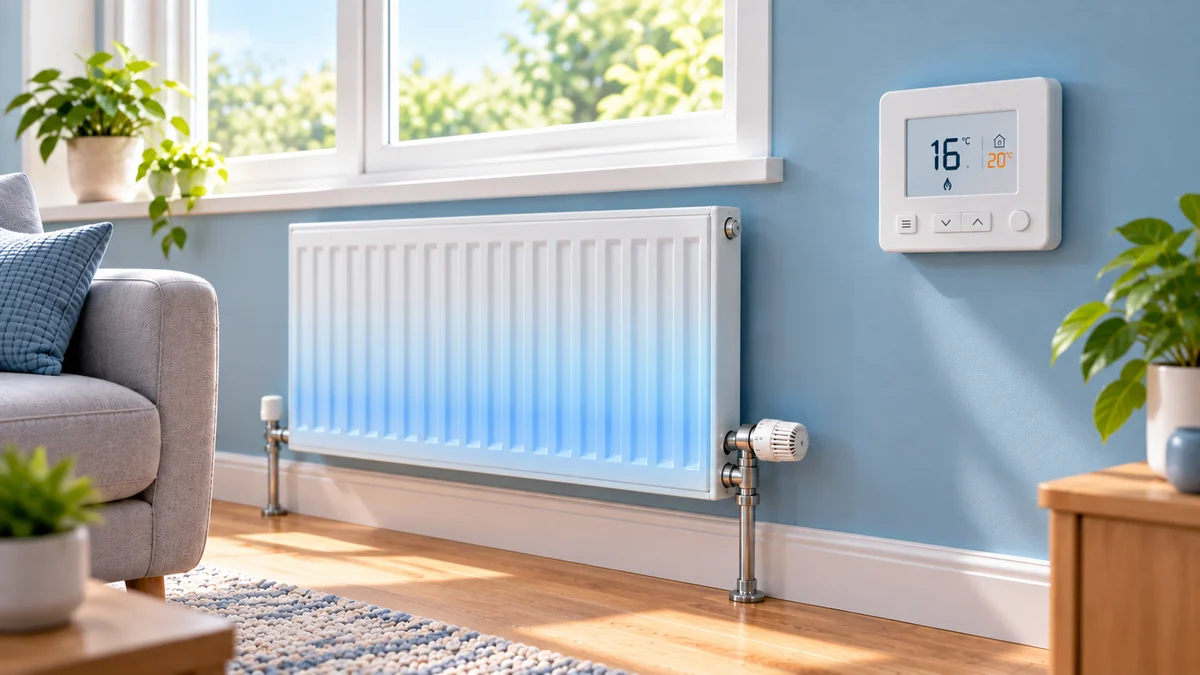
The flame or “Heat On” symbol says that the controller is requesting heating, not that the boiler or furnace has actually started. UK wireless controls can lose their thermostat-to-receiver link while the internet connection still works—or keep local heating running when the app connection fails. Where the manufacturer offers visible receiver indicator lights, consult its model-specific chart. Do not bypass a receiver or manually bridge contacts.
Some wet-heating circuits also rely on a motorised zone valve that must open before the heat source and circulation work correctly. A zone valve or control relay may stick; this is an engineer's electrical/mechanical diagnosis, not an invitation to force a valve. If a new thermostat has never started the heating, incompatible wiring or incorrect system configuration needs qualified assessment.
STAGE 3 · UK BOILER
Boiler display is off, locked out or making hot water only
Look at the front display and normal user controls. An unlit boiler may lack supply or have an appliance fault; a visible error code may point to low water pressure, a blocked condensate drain, ignition failure or another protective shutdown. Different brands use different codes, so record the exact text and check the manufacturer manual. A repeated fault code should not be bypassed by repeated resetting.
Some sealed central-heating systems stop firing when water pressure becomes too low. Read the pressure only at the normal gauge and compare it with the manufacturer's cold-system range; do not assume 1 bar is correct for every installation. If pressure repeatedly drops, a leak or expansion-vessel issue may need professional work. See boiler losing pressure.
In freezing conditions, certain condensing boilers can shut down when an exposed external condensate pipe freezes. If the owner manual permits thawing an identified accessible pipe, use warm—not boiling—water, avoid unsafe access and follow the maker's restart procedure. Never disconnect boiler internal pipework. If the appliance briefly ignites then stops, see why the boiler fires then stops.
Hot taps but cold radiators? Where the system supplies both hot water and heating, the hot-water side can work while a heating-only programme, valve, pump or control circuit fails. This clue does not prove that the diverter valve is faulty; a technician must establish the exact system design first. Use boiler hot-water troubleshooting only if the hot-water supply is also affected.
STAGE 4 · DISTRIBUTION
The boiler starts, but radiators remain cold
When the heat source runs but the rooms do not warm, distinguish a whole-house circulation issue from a single radiator. Listen only for normal operation and compare whether a nearby radiator or pipe warms gradually (do not touch potentially hot exposed metal). Pumps, zone valves and airlocks can restrict movement of heated water. A little trapped air in one radiator does not explain every house-wide heating failure, and power flushing is not a sensible default repair.
If only one radiator is cold, inspect its accessible thermostatic radiator valve setting before treating the boiler as broken. If the top is cold while the bottom warms, trapped air may be plausible in a water-filled radiator; if the bottom is cooler, heat extraction can be normal and a blockage must not be assumed. Read only one radiator not heating, cold at the top and cold at the bottom for more focused diagnosis.
US · FORCED AIR
Why a US furnace won't start or blows cold air
US forced-air systems add different fault boundaries. Confirm that the thermostat is in Heat mode, its target is above room temperature, the furnace has power from its normal service switch, and the circuit breaker has not tripped. A furnace may intentionally delay startup. The equipment may have a status light or error code visible without removing covers; use the manufacturer manual.
If the fan runs but supply vents blow cool air, a failing ignition sequence or safety shutoff may be involved. An excessively dirty user-accessible air filter can restrict flow and contribute to overheating, so check the filter using the manufacturer's safe owner procedure and correct replacement type. Also check that accessible supply and return vents aren't blocked by furniture; do not tamper with burners, gas valves, flame sensors or electrical controls. Some faults stop heating while leaving the blower working. Arrange licensed HVAC service when the appliance repeatedly fails to ignite or shuts down.
HEAT PUMPS & ZONED SYSTEMS
Heat pump running, but the house feels cold
Air-source heat pumps often deliver gentler, longer heating cycles than traditional high-temperature boilers. Short pauses for defrost and protective delays can be normal in cold weather; this is not the same as a fault that leaves the home consistently cold. Check normal Heat mode, target temperature, visible error indicators and clear accessible airflow paths according to the manufacturer's instructions.
On ducted systems, clogged filters, blocked indoor registers or an outdoor unit with restricted airflow can affect performance. Never chip ice from coils, interfere with refrigerant pipework, defeat a defrost function or modify auxiliary-heater wiring. On hydronic heat-pump systems, a fault in a water pump or mixing control may prevent warmth reaching radiators or underfloor heating. If the actual room temperature keeps falling while heating is requested, seek a qualified heat-pump engineer.
AT-A-GLANCE DIAGNOSIS
Match the observed symptom to the next check

| What you observe | First safe check | What it does NOT prove |
|---|---|---|
| Thermostat blank | User-changeable batteries or visible power | That the boiler has failed |
| Heat icon but silence | Receiver light and equipment display | That the thermostat is defective |
| Fault code / lockout | Exact manufacturer code and manual | That resetting repeatedly is safe |
| Hot taps; no radiators | Heating-only schedule, zone indicators | That a diverter valve is definitely faulty |
| Furnace fan; cold vents | Accessible filter, error indicators | That the fan motor is broken |
WHEN TO GET HELP
What to tell a heating engineer
Call a qualified professional if controls show a demand but no heat is produced, there is a recurring boiler lockout, pressure keeps falling, electrical trips recur, a zone valve or pump needs testing, the furnace will not ignite, or the heat pump fails to maintain temperature. UK gas-appliance work requires a Gas Safe registered engineer; use a properly qualified HVAC or heat-pump professional elsewhere.
Give the exact thermostat and appliance model, displayed room and target temperatures, heating mode and timer status, whether hot tap water works, any fault code, pressure reading if applicable, the number of cold zones or radiators, and whether there was a power cut or installation change. This makes the service call much more targeted.
FREQUENTLY ASKED QUESTIONS
Twelve common heating-not-starting questions
Why won't heating start when the thermostat is turned up?
The thermostat may not be in Heat mode or its schedule may still prevent a request. If the display shows a heat call, the problem could be at the receiver, boiler or furnace, or heat distribution. Check the equipment status instead of simply raising the setting.
Can the hot water work when central heating is broken?
Yes, on systems with separate hot-water and heating functions. The hot-water path can work while a heating-only programmer, zone valve, pump or control circuit fails. The significance depends on the boiler and system design.
Does a flame icon guarantee the boiler has fired?
No. The icon generally reports a request for heat by the controller. A receiver or appliance may still be unable to respond.
What pressure should my boiler have?
Some sealed domestic boilers show around 1–1.5 bar when cold, but the manufacturer's recommended range is the correct reference. Open-vented systems behave differently. Never repeatedly add water without investigating recurring pressure loss.
Why did my heating stop after a power cut?
The controller clock, schedule or pairing could have reset, or an appliance may show a new fault. Check normal user settings and display messages first rather than immediately performing a factory reset.
Should I reset the boiler again and again?
No. An approved reset may be appropriate once according to the manual, but a recurring lockout usually indicates a fault that needs qualified diagnosis. Repeatedly bypassing it can be unsafe.
Will bleeding every radiator restart the heating?
Not if the thermostat is not requesting heat or the boiler is off. Bleeding may help an affected water-filled radiator with trapped air; it is not a universal remedy for a house-wide outage.
Why is my furnace fan running but there is no heat?
The blower may continue while the burner is off, or an ignition or safety fault may prevent the furnace from heating. Check visible fault lights, the accessible filter and the manufacturer's user guidance, then seek licensed HVAC help.
Why does my heat pump stop occasionally in winter?
Some heat pumps temporarily change operation for defrost or protective control. But an ongoing drop in indoor temperature with a heat request can indicate a fault; check the specific model display and arrange service if necessary.
Is it normal for one heating zone to stay cold?
Not when that zone has a valid heat request. Check its schedule and setpoint; a zone valve, receiver, sensor or local delivery fault may need professional evaluation.
Can Wi-Fi failure stop all the heating?
It varies by smart control. Some retain local heating control without internet, while others depend on a hub or wireless receiver. Check whether the local thermostat still requests heat and follow the manufacturer's exact model guidance.
When is it a heating emergency?
A suspected gas leak, carbon-monoxide alarm, smoke, electrical burning or persistent tripping requires urgent safety action. Leave the area and contact emergency help; don't troubleshoot appliance internals.
AUTHORITATIVE REFERENCES
Equipment and safety sources
- British Gas — If your heating isn't working
- Worcester Bosch — What to check before calling an engineer
- British Gas — Boiler not working
- Which? — Common boiler problems and repairs
- Honeywell Home — Heating not working in forced-air systems
- Carrier — Furnace not turning on
- Carrier — Furnace troubleshooting
These are general guides. The manual and displayed code for the actual installed equipment take priority.