INTERACTIVE EIGHT-OPTION SYMPTOM FINDER
Where does the heat appear?
Choose the closest observation. This identifies a safer next step and links to an explanation already visible on this page. It cannot remotely confirm an electrical fault.
QUICK ANSWER
What causes a plug socket to get hot?
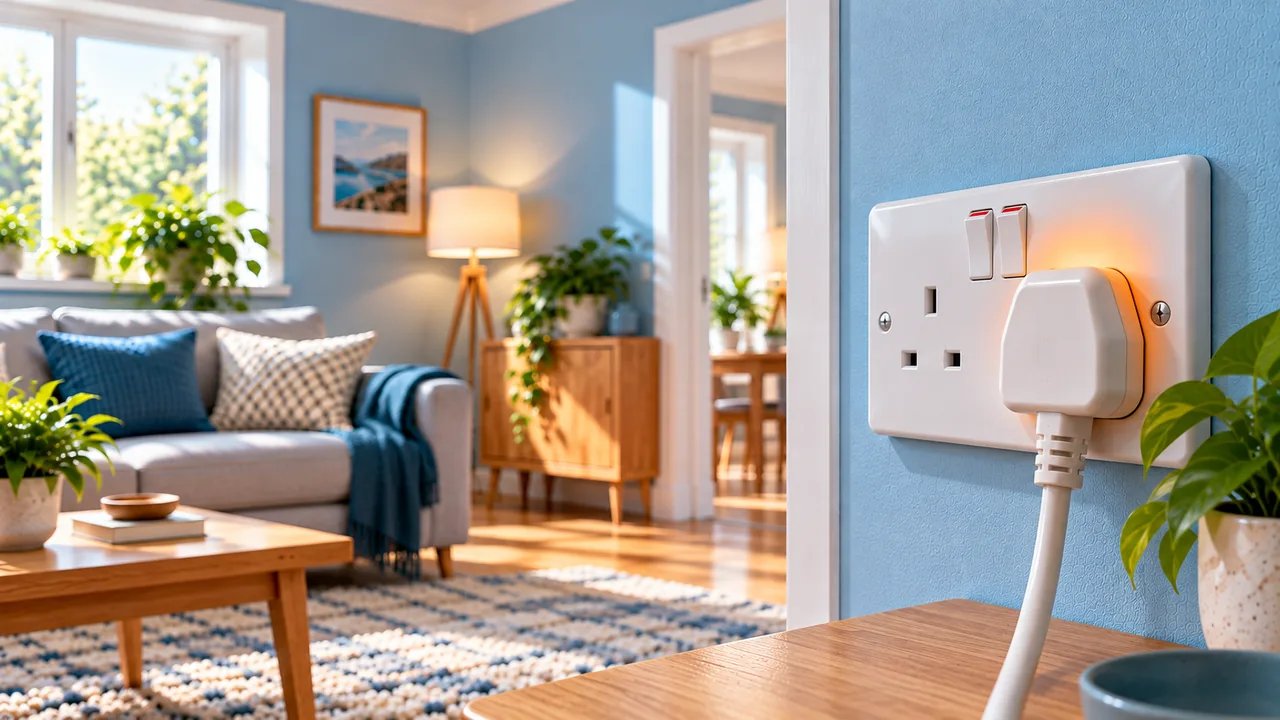
A plug socket can become hot when electrical current produces heat in a high-resistance connection. Worn internal contacts, poorly fitting plug pins, loose wiring connections, a damaged plug or a heavily loaded adaptor can all be involved. Some components may become slightly warm during normal operation, but a wall socket or plug that is noticeably hot, discoloured, crackling or smells burnt should not be used.
The precise cause depends on where the heat originates, how long the load has been running, and whether the affected outlet is part of a larger circuit. A wall plate becoming hot with no appliance directly plugged in is a particular warning that requires investigation. A breaker failing to trip does not prove the connection is safe: a local resistive fault can produce heat without exceeding the breaker's trip current.

STOP USING UNSAFE EQUIPMENT
Which warning signs require urgent attention?
Do not remove an outlet faceplate, tighten terminals, probe slots with a screwdriver, use a multimeter on exposed mains conductors, bypass an RCD/GFCI or repeatedly reset tripping protection. Do not use an apparently sound outlet half to “test” the suspect socket. Seek a qualified electrician for fixed wiring and a competent appliance repair service or replacement for suspect plugs and leads.
Keep children and pets away from the affected area. Water near an electrical point raises the risk further; avoid contact and request professional isolation.
SAFE FIRST OBSERVATIONS
What can you check without opening the socket?
- Identify where you first noticed trouble. Was there a burning smell, brown mark, warm wall plate, hot plug body or unusually hot extension? Do not touch the affected parts to confirm it.
- Note the appliance. Did the issue appear with a kettle, toaster, portable heater, tumble dryer, vacuum or another high-power item? Record its rated power from its label when accessible safely.
- Observe the pattern rather than repeating it. Was this after an hour of use, immediately on plugging in, or even with an apparently unused socket? Recreating a dangerous fault is unnecessary.
- Look from a safe distance. Do you see distortion, discoloration, smoke, cracks, worn leads or a loose plug? Any of these means stopping use.
- Check extension ratings only when safe. Once fully disconnected, cool and undamaged, read the extension or adaptor label. Total connected wattage matters more than the number of spare sockets.
Take a photograph from a safe distance if useful for a contractor; avoid handling the plug or continuing to use the outlet to gather more evidence.
PATTERN 1
The socket warms up when a powerful appliance runs
A 2,000–3,000 W appliance can draw substantial current for a sustained period. At a 230 V UK supply, a 2,300 W load draws about 10 A (actual current varies with appliance and voltage). Even a small amount of resistance at a poor connection can generate considerable heat because contact heating is approximately proportional to current squared multiplied by resistance (I²R).
Some appliance plugs or integral electronics become mildly warm in normal service, but a hot wall outlet is not something to dismiss as “just a high wattage load”. Stop using that outlet, particularly if its faceplate, switch or plug is noticeably warm, damaged or discoloured. Have it checked before re-use. Large heating appliances should be supplied as recommended by the manufacturer, rather than through overloaded multiway adaptors or extension leads.
Do not repeatedly operate a high-powered appliance to see whether it heats the socket again. Recurrent local heat can accelerate contact damage.
PATTERN 2
The plug, fuse area or pins appear hot
When heat is concentrated in a removable plug, possible causes include poor contact between pins and socket contacts, deterioration at the plug's connections, a damaged cable termination or—where fitted in the UK—a faulty fuseholder or connection. A plug that fits loosely may also suffer intermittent contact. Merely changing the plug fuse will not solve a poor electrical connection.
Electrical Safety First advises checking accessible plugs for damaged cases, cable strain, melting, discolouration and suitable fuse ratings—but only when the plug is safely unplugged and cool. If it was hot, damaged or scorched, don't handle it to investigate and don't continue using it. A qualified person should determine whether the plug, appliance lead and wall socket all need examination.
For UK BS 1363 plugs, fuse selection must match the appliance and flex protection requirements; never increase the fuse rating in an attempt to keep a hot plug working.
PATTERN 3
The wall socket feels warm even with nothing plugged in
An apparently empty outlet that is unusually warm should be considered a fixed-installation concern. The absence of a directly connected appliance does not necessarily mean that no current passes through any of its internal connections. Some socket circuits feed other outlets, or have a nearby source of heat, while certain USB-equipped outlets contain powered electronics.
Do not assume a loose terminal is definitely the cause: overheating can involve contacts, connected wiring, another load on the circuit, an integral USB supply or an external heat source. Distinguishing these requires an electrician's inspection and electrical testing—not feeling the wall plate repeatedly or removing the cover.
If the faceplate is hot or shows danger signs, avoid it and seek prompt professional help. Do not leave the socket energised and unattended if there is evidence of an active overheating fault and it cannot be safely isolated.
PATTERN 4
The outlet gets warm with only a charger or lamp
A small USB charger, LED lamp or laptop adaptor normally draws much less current than a portable heater. Substantial heating of the wall socket under such a modest load is not explained well by the appliance wattage alone and deserves investigation. Damaged receptacle contacts, a faulty integrated USB socket or a nearby connection could be involved.
The power supply inside a phone or laptop charger may itself become warm, but that is different from the wall plate being hot. The distinction is helpful when describing the problem, not a reason to touch the components while operating.
If heat is concentrated at a charging unit, follow its manufacturer's safety information and discontinue suspect equipment; never put a hot charger under bedding, carpets or cushions.
PATTERN 5
An extension lead or multi-plug adaptor becomes hot
A multiway bar does not increase the electrical capacity of the wall socket. The sum of all connected loads must remain within the stated rating of the extension, its plug and circuit. In Britain many extensions are rated 13 A, but some are 10 A or less. A 2,000 W heater plus a 2,000 W kettle on the same typical 13 A extension would exceed its rating at 230 V.
Other heating mechanisms include worn sockets in the extension, poor plug contact, damaged insulation, an extension cable reel left wound under load, or an unsuitable daisy chain of extension leads. Electrical Safety First recommends keeping reels unwound when appropriate for their rated load, avoiding daisy-chaining, and not exceeding the marked current rating.
Stop using an extension that has heated, discoloured or begun to smell; replace damaged equipment rather than taping cables or continuing to use it. Ask an electrician whether additional fixed outlets are appropriate when extensions are relied on continually.
PATTERN 6
Only one half of a double socket becomes warm
A UK double socket has separate pin-contact areas and internal connections, so one half may behave differently. The appliance plugged into that side, a worn contact or another internal component could account for the symptom. That does not mean the unaffected half is proven safe; the assembly may share conductive components and wiring connections.
Stop using the whole suspect accessory until it has been assessed. A visual inspection for scorch marks is useful only from a safe distance. Do not remove the faceplate or plug items into the other side as an experiment.
A professional may decide that replacing the socket accessory is appropriate, but should also assess the plug condition and upstream connections rather than assuming the wall plate itself is the only fault.
PATTERN 7
A US receptacle or GFCI wall plate is getting warm
US outlets commonly use 120 V branch circuits and may have standard receptacle, GFCI or AFCI protection. Some GFCI and smart receptacles contain electronics, but a noticeably hot wall plate, burning smell, scorch mark or crackling noise still warrants prompt attention. Never rely on the presence of a functioning TEST/RESET button as evidence the outlet has no overheating problem.
High-wattage space heaters should be used only as directed by the manufacturer. The Electrical Safety Foundation International advises plugging major appliances directly into wall receptacles rather than power strips or extension leads. An electrician should assess a suspect outlet, particularly where an outlet is loose, discoloured or warms repeatedly.
For consumers in the United States, GFCI equipment protects against certain shock hazards; circuit breakers protect against overcurrent. Neither necessarily detects every high-resistance connection that can overheat locally.
UNDERSTAND THE MECHANISM
Why may the breaker not trip when a socket overheats?
A circuit breaker generally responds when current exceeds its prescribed time/current characteristic. Heating at a damaged or resistive contact can be concentrated in a tiny area while the rest of the circuit remains within its normal current range. The contact may deteriorate further with repeated heating and cooling.
That is why a breaker remaining ON does not make a hot outlet safe. Also, RCD/GFCI protection is aimed at particular leakage or ground-fault conditions; it does not diagnose all possible overheating modes. AFCI technologies may detect some types of arcing but are not a substitute for sound electrical connections.

WHAT SHOULD BE REPLACED?
Will replacing the socket solve the problem?
Sometimes, but the electrician needs to find the cause first. A socket with damaged pin contacts may need replacement; a loose or deteriorated cable termination requires a correctly made and tested connection; a damaged plug or appliance lead may need replacement as well. If overload caused the heating, correct load distribution and suitable circuits are essential.
Simply installing a new faceplate without checking the appliance plug and connected wiring could leave the dangerous condition unresolved. Neither a higher-rated fuse nor a larger breaker is a substitute for properly matched wiring, accessories and protective devices.
Ask for appropriate inspection/testing after corrective work and retain a record of the repair for future reference. If rented, inform the landlord or managing agent promptly, with clear descriptions of the danger signs.
UK AND US DIFFERENCES
Do British and American outlets overheat for the same reasons?
Yes, the basic mechanism—electrical power becoming concentrated heat at a resistive or overloaded connection—is common to both. But the plug designs, nominal supply voltages, outlet ratings and protection arrangements differ. UK BS 1363 appliances commonly have a fused three-pin plug and switched socket outlets; US NEMA receptacles typically do not contain a UK-style plug fuse and may use GFCI or AFCI devices.
Do not transfer fuse ratings, wire colours or wiring instructions from another country. For the UK, use Electrical Safety First guidance and a properly qualified electrician. For US homes, follow ESFI and device-manufacturer instructions and use a licensed electrician.
WHEN TO CALL A PROFESSIONAL
What details help an electrician investigate quickly?
Tell the electrician whether the plug, wall plate or extension got hot; whether the issue followed one appliance; the approximate appliance wattage if known; whether heat appeared under heavy load or with no direct load; and whether there were scorch marks, crackling, melting, a smell or circuit trips. If safe, provide a photograph taken without touching or dismantling the equipment.
Do not allow repeated operation just to recreate the fault, and avoid reusing an affected plug or outlet pending inspection. If there is smoke or active fire, prioritise evacuation and emergency services over diagnosis or saving equipment.
COMMON QUESTIONS
Frequently asked questions
Is it normal for a plug socket to get warm?
A plug or its power electronics may become mildly warm under a sustained load, but noticeably hot wall outlets and plugs should not be considered normal. Stop using anything with discoloration, heat, smell or crackling.
Why is my socket hot but the breaker has not tripped?
A high-resistance connection can create concentrated heat while the total circuit current remains below the protective device threshold. A breaker being on does not prove safety.
Can a socket be hot when nothing is plugged in?
Yes, connected wiring may carry current to other parts of a circuit, or an integral USB supply may be powered. Excessive heat in an unused wall outlet needs professional inspection.
Can a loose plug make the socket hot?
A poor contact between plug pins and outlet contacts can increase resistance and heat. Do not continue using a loose or discoloured connection.
Why does the socket only get hot when I use the kettle?
High current can magnify heating at a poor contact. Stop using the outlet and have both outlet and plug assessed; do not assume the kettle is solely responsible.
Can a phone charger cause a socket to overheat?
A faulty charger or poor outlet contact can contribute to heating, but a low-power charger alone normally should not make a wall plate noticeably hot. Do not use suspect equipment.
Should I unplug a very hot plug immediately?
Do not touch a dangerously hot, melting or sparking plug. If safely possible, switch off the circuit at the consumer unit or breaker, keep clear and obtain urgent professional help.
Can I replace the socket myself?
Fixed electrical work requires appropriate skills, isolation, testing and compliance with local rules. A qualified electrician should diagnose an overheated outlet and related wiring.
Is it safe to use the other side of a hot double socket?
No. The sides may share parts of the accessory and connected wiring. Stop using the entire suspect outlet until it has been checked.
Will an RCD or GFCI always trip if a socket overheats?
No. These devices protect against specific leakage or ground-fault conditions; they do not identify all poor contacts or local heating faults.
Can an extension lead cause the wall socket to overheat?
Yes. Excess combined load, poor contacts, damaged leads or daisy-chained adaptors can create heating, including at the plug entering the wall socket.
How can I tell if the plug itself or wall socket is faulty?
From a safe distance you can note visible damage and which equipment was in use, but reliable diagnosis needs electrical inspection. Do not touch hot parts, swap suspect plugs or repeat a dangerous test.
AUTHORITATIVE REFERENCES
Technical and electrical-safety references
These explain common mechanisms and appropriate warning signs; they cannot certify any particular wiring installation remotely.
- Electrical Safety First: Plugs and fuses
- Electrical Safety First: Overloading sockets
- Electrical Safety First: Extension leads and cable reels
- Electrical Safety Foundation International: Do not overload your home
- London Fire Brigade: Cables, fuses and leads
Educational guidance only. Suspected electrical overheating requires appropriately qualified attention.